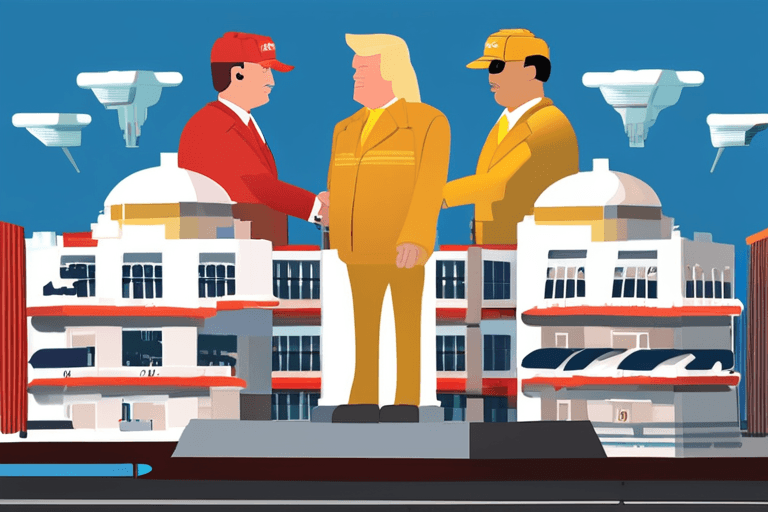
President Donald Trump claimed the U.S. is receiving full cooperation from Venezuela's interim administration and will control the country and its oil reserves for years to come, according to an interview with the New York Times. Trump stated that Caracas is giving Washington "everything that we feel is necessary" and that the U.S. would remain a political overlord there for an indefinite period.
"We will rebuild it in a very profitable way," Trump told the New York Times, adding, "We’re going to be using oil, and we’re going to be taking oil." When asked how long the White House would demand direct oversight of Venezuela, he responded, "I would say much longer" than a year.
Trump's comments followed statements by Venezuela's interim president, Delcy Rodríguez, who defended plans to open up her country's oil market. The situation raises complex questions about international relations, resource control, and the role of external influence in sovereign nations. The concept of "control" over a nation's resources, as articulated by Trump, touches upon established principles of international law and national sovereignty.
Venezuela possesses the world's largest proven oil reserves, but its oil production has plummeted in recent years due to economic mismanagement, corruption, and U.S. sanctions. The U.S. has imposed sanctions on Venezuela's oil industry in an effort to pressure Nicolás Maduro, the country's president, to step down. The U.S. recognizes Juan Guaidó as the legitimate interim president of Venezuela.
The implications of the U.S. exerting control over Venezuela's oil reserves are significant. It could potentially lead to increased U.S. influence in the region, reshape global energy markets, and impact Venezuela's economic recovery. However, such control could also face legal challenges and international condemnation, particularly if it is perceived as a violation of Venezuela's sovereignty.
The current status of U.S.-Venezuela relations remains tense. While the U.S. supports the interim government, Maduro remains in power. The future of Venezuela's oil industry and the extent of U.S. involvement will likely depend on the outcome of the political struggle within Venezuela and the evolving dynamics of international relations. The next steps could involve further negotiations between the U.S. and the interim government, potential legal challenges to U.S. control over Venezuelan oil, and continued efforts to address the humanitarian crisis in Venezuela.
















Discussion
Join the conversation
Be the first to comment